Department for Infrastructure (NI) Transport & Road Asset Management Road Asset Management Small Works Framework Ref: T-1160 Preliminary Market Engagement
Overview
- INTRODUCTION
The Department for Infrastructure’s Transport & Road Asset Management (TRAM) is responsible for the strategic stewardship, maintenance and enhancement of Northern Ireland’s public road network and associated infrastructure. TRAM plays a central role in ensuring the safe, efficient and sustainable movement of people and goods by overseeing the planning, delivery and management of maintenance, improvement works and critical operational activities. Through effective asset management, collaborative working with Suppliers, and a commitment to value for money, TRAM supports a resilient transport network that underpins economic activity, community connectivity and long‑term infrastructure sustainability.
The Department for Infrastructure is initiating a Preliminary Market Engagement exercise to inform the development of a new integrated framework intended to encompass the breadth of activities currently delivered through the Small Scale & Responsive Works and Environmental Maintenance contracts across Northern Ireland. This engagement aims to gather early insight from the supply chain on the feasibility, capacity and innovation potential for a consolidated approach to delivering routine and responsive maintenance, small-scale improvement works, environmental services, and associated operational activities across the public road network. Supplier feedback will play a key role in shaping a procurement strategy that ensures resilience, value for money, and efficient delivery of services that support the safe and sustainable management of Northern Ireland’s road network.
- BACKGROUND
Currently, the scope of the proposed Small Works Framework is being delivered through 21 separate Measured Term Contracts (MTCs). This includes twelve Small Scale & Responsive Works and nine Environmental Maintenance MTCs which have been procured over three competitions.
The form of contract presently utilised for these MTCs is the Infrastructure Conditions of Contract (ICC), August 2011 version with October 2011 amendments, plus Employer amendments.
3. SCALE, SCOPE AND NATURE OF REQUIREMENT
Scope
An NEC4 Framework will be used to support efficient procurement, contract flexibility, delivery resilience, and the establishment of best practice groups to support continual improvement and value for money. The framework will encompass eleven Measured Term Contracts (as set out in Figure 3.1 below) to deliver Small Works across the following Contract Areas:
- SWF N1 - Antrim & Newtownabbey
- SWF N2 - Mid & East Antrim
- SWF N3 - Causeway Coast & Glens
- SWF E1 - Belfast City
- SWF E2 - Lisburn & Castlereagh
- SWF S1 - Newry, Mourne & Down
- SWF S2 - Armagh City, Banbridge & Craigavon
- SWF S3 - Ards & North Down
- SWF W1 - Mid Ulster
- SWF W2 - Fermanagh & Omagh
- SWF W3 - Derry City & Strabane
At initial publication of the Procurement Enhancement Programme procurement strategy – 17 Small Works contracts were proposed to align with the then operational structure within Network Services. In response to an on-going review of DfI TRAM maintenance structures, eleven contract areas are now proposed.
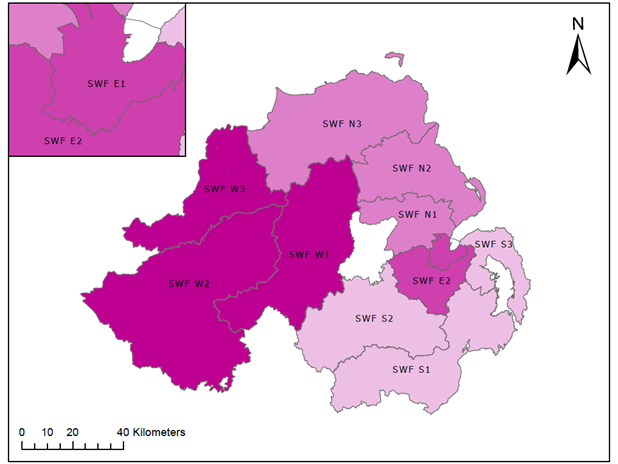
Figure 3.1 Proposed Small Works Contract Areas
The proposed framework will bring together the full range of routine, responsive and small-scale civil engineering activities required to support the safe and efficient operation of Northern Ireland’s public road network. The framework is intended to provide a flexible and resilient mechanism for delivering these works across multiple geographic contract areas, ensuring that Suppliers can respond to routine programmes as well as time‑critical, responsive and emergency works through a consolidated and efficient procurement model.
This arrangement involves the encompassing environmental and small-scale civil works within single MTCs. The contracts will also include elements of road marking work as part of these works. However, a separate framework for dedicated Road Marking and Surface Treatment works will be released for tender in late 2026.
This procurement approach forms part of the wider final Procurement Enhancement Strategy. The strategy aims to deliver greater efficiency, value for money, and resilience in the procurement and delivery of road maintenance and improvement works by streamlining processes, introducing flexible and collaborative contract arrangements, and reducing the overall number of contracts. It also seeks to strengthen industry confidence and sustainability by improving procurement systems, enhancing performance monitoring, supporting innovation, and ensuring a competitive and capable supply chain.
The proposed Small Works Framework is one of eleven RAM frameworks being developed to provide an efficient and value for money procurement route for the delivery of road asset maintenance across the province. Full summary is provided in the RAM Frameworks - RAM Frameworks - Procurement Essentials
Within each Contract Area, the works to be undertaken under contracts from this framework may include the following activities on the public road network:
- Temporary and permanent repairs/patching/reinstatements (typically up to 100m2) of openings and defects in carriageways, footways and cycleways.
- Delivery of temporary traffic management as part of associated works on a live trafficked public road network.
- Cleaning, jetting and inspection of roadside drainage systems.
- Maintaining grass in both urban and rural areas.
- Edge ploughing, scuffling and moss removal from carriageways, footways and cycleways.
- Controlling weed growth.
- Construction and surfacing of carriageways, footways and cycleways.
- Provision, adjustment and maintenance of drainage systems including culvert grilles.
- Provision and adjustment of kerblines.
- Earthworks including verge reconstruction and slope stability.
- Fencing Construction.
- Cut, remove or maintain trees / hedges and associated works*.
- Small network improvement schemes such as:
- traffic calming;
- traffic management; and
- civils works associated with traffic signal replacements/installations at junctions/crossings.
Further ancillary works may be asked of the successful Economic Operator such as:
- Provision of compliant Temporary Traffic Management;
- Removal of advertising signs;
- Cleaning of road signs and marker posts; and
- Road marking reinstatement.
* DfI is currently exploring the potential inclusion of specific tree surgery activities within the scope of this framework.
Note: The work activities listed above may be responsive type work required to be done within specific time limits with target response times. Some of these may arise on an emergency basis (e.g. on-call out of hours) and require Suppliers to maintain suitable standby arrangements to enable immediate response where necessary. This may include the provision of labour, plant, materials and temporary traffic management at short notice, in order to meet defined response requirements.
Within each Contract Area, the successful Supplier will be required to carry out any such works instructed by a Works Order, issued under the provisions of the Contract. Such works will require a standard of works delivery consistent with that defined in the Procurement Documents. Reimbursement to the successful Supplier for such works will be paid on the basis of an applicable Schedule of Rates and Prices (SoRP), adjusted in line with permitted price-fluctuation-factor provisions.
For each Contract Area, the successful Supplier will be required to work at more than one location at any one time, in order to meet the requirements of the DfI maintenance programme of work for each Contract Area.
Successful Suppliers will be expected to have sufficiently skilled and available resources necessary to meet the requirements of such a programme and will be required to include in its rates and prices for the inevitable peaks and troughs that will be inherent in any such programme. Such peaks and troughs may result from a variety of circumstances, not all within the control of the Department.
The financial limits for individual Works Orders under these contracts shall generally be up to £50,000 GBP.
Suppliers should be advised that the Department is under no obligation to issue any Works Order under the contracts.
A web-based contract management system software application (app), developed for administrating the ICC contract will be provided by the Department. The app can be operated on any PC or smart device, e.g. tablet or smartphone etc, with internet access. It shall be used by the Contractor and the Department throughout the life-cycle of the contract. The app shall allow for the full electronic administration of Contract.
The Department will allow secure access and administration rights to the relevant Contractor’s staff during the term of the contract. The Department shall provide user guide support to the staff of the Contractor in the use of the system. Suppliers shall include in their rates and prices, the costs to provide the necessary compatible electronic devices and network subscriptions to facilitate the requirements of the app.
Framework Operation Description
Measured Term Contracts (MTCs) covering eleven Contract Areas (Lots 1-11) will be awarded upon execution of the Framework. All MTCs will use the Infrastructure Conditions of Contract (ICC), August 2011 version with October 2011 amendments, plus Employer amendments.
A Primary Supplier and Reserve Supplier will be appointed for each MTC Lot, as a result of the evaluation of the Framework tender submissions. The Primary Supplier will be required to carry out any such Works instructed by a Works Order, issued under the provisions of the MTC Call-Off Contract.
Reserve Suppliers may be required to carry out work if the Primary Supplier’s MTC is suspended or terminated, or if Emergency Works or a Works Backlog cannot be delivered by the Primary Supplier due to performance or capacity issues. They may also be required when the Primary Supplier cannot meet the immediate response requirements for Emergency Works.
The Framework will apply market share limits (Framework Award Restrictions) to control how many MTC Lots any one Supplier can hold. These restrictions are designed to improve supply chain resilience, protect competition, and avoid over‑concentration of work. It is proposed that a Supplier may hold a maximum of three Primary Supplier positions. There will be no restriction on how many Contract Areas a Supplier may tender for.
The Framework will include additional Call-Off Procedures as summarised below:
- Replacement Contract Procedure
Replacement Contracts are to be used when a Primary Supplier’s MTC is suspended or terminated. The Client allocates the Replacement Contract to the Reserve Supplier, provided they pass all exclusion checks (restrictions, compliance, performance) and have capacity to deliver. If the Reserve Supplier cannot be appointed, the Client works down the Lot rankings until a suitable Supplier is identified.
- Emergency Works Procedure
Emergency Works are urgent activities required to address risks to safety, infrastructure or significant disruption. The Works Order is normally given to the Primary Supplier for the relevant Lot; however, if they lack capacity etc, the order is instead offered to the Reserve Supplier, provided they hold an MTC on another Lot and can respond immediately. If neither is suitable, the Client continues down the Lot rankings until a capable Supplier is found.
- Works Backlog Procedure
A Works Backlog arises when Works under a MTC are not completed in required timescales and accumulate. When this occurs, the Client issues a Works Order Reallocation Notice, naming a Supplier to undertake backlog work during a defined period. The Reserve Supplier is selected first, subject to exclusion checks and capacity, and if suitable, may receive a dedicated Works Backlog Contract; if not, the Client selects the next highest‑ranked Supplier (or, if required, the geographically closest Primary Supplier).
The duration of the Framework is four years. If the Contracting Authority is unable, for any reason, to award a new framework or to put in place an alternative regime to replace the Framework on its termination or expiry, it is proposed that any Call-Off Contract established under the Framework may be extended for a further period or periods up to a maximum of twelve additional months.
Infrastructure
Existing infrastructure approximately consists of:
- 26,000+km of roads;
- 5,900 bridges;
- 10,000km of footways; and
- 607,500 gullies.
The road network has an extensive network of signage, traffic signals, controlled pedestrian crossings and other traffic monitoring and management infrastructure.
On average, DfI TRAM repair approximately 150,000 road defects, resurface approximately 330km lanes of road each year, along with delivering all other routine maintenance functions.
Timescales
The indicative procurement timings are as follows:
|
Deliverable |
Indicative Date |
|
Launch of procurement exercise |
January 2027 |
|
Award of Framework |
November 2027 |
|
Establishment of Framework and new term contracts |
January 2028 |
Objectives of the Market Engagement Exercise
The objectives of this exercise are to:
- gain further Supplier awareness, engagement and opinion. A packaging proposal was issued as part of an internal and external consultation in September 2022 (DfI Roads - Market Consultation - Briefing). This consultation was advertised through the UK Find a Tender service;
- provide confidence around viability of concept details;
- gain insight to the market possibilities and potential innovative solutions; and
- understand risks and issues not previously considered.
Approach to the Market Engagement Assessment
As part of the preparation, the Department for Infrastructure is running a Preliminary Market Engagement exercise and is inviting suitably qualified and experienced bidders who may have an interest in this project to complete the attached questionnaire to assist the Department gain a better understanding of the feasibility of their requirements, the most appropriate approach, the capacity of the market to deliver and any possible risks or issues that may not have previously been considered. This engagement is in addition to previous external consultation undertaken with the market in September 2022 (DfI Roads - Market Consultation - Briefing). Following the conclusion of that consultation, the final PEP procurement strategy was published in March 2023.
In responding, you should understand that detailed and lengthy submissions are not necessary at this stage. Nonetheless, we welcome any pertinent information on your company’s capability and views on an approach to the provision of a range of required services.
Respondents’ views or submissions will not be individually identified or revealed to third parties. All information provided in this exercise will be treated in confidence and will NOT be considered in any future tender evaluation exercise. Information gathered will be used in the development of a business case / tender on the most suitable approach to meeting the operational and management needs of the Department.
Any information provided in response to this Preliminary Market Engagement exercise marked as commercially sensitive will be treated as such. Participants are asked to identify any of the information supplied during this exercise which should not be disclosed because of its sensitivity. In doing so participants must specify the reasons for its sensitivity and specify the period for which the information will remain sensitive.
The Department for Infrastructure will endeavour to consult with a concerned participant about sensitive information before deciding on any Freedom of Information requests received. The final decision on any Freedom of Information request rests with the relevant public body, subject to applicable law.
Participants should seek their own legal advice on the application of Freedom of Information legislation. The Department for Infrastructure will consider statements of confidentiality and commercial sensitivity that are provided by participants.
This document sets out the objectives of the exercise, provides background information and outlines the scope of services proposed to be provided by prospective Suppliers. Any submission received in response to this exercise will not constitute any contractual agreement between the respondent and the Department for Infrastructure.
Interested parties shall bear their own costs of participation in this preliminary market engagement exercise of whatever nature. The Department for Infrastructure shall not be liable for the costs, expenses or losses howsoever arising (including, without limitation, any loss of profit or other economic loss incurred) regardless of the outcome of the preliminary market engagement exercise.
The next stage in the process will be to initiate the procurement of the Framework which is anticipated to commence January 2027, subject to Department business case approval and funding availability.
Suppliers are advised that the scope and requirements of the proposed Small Works Framework may be subject to refinement following the Department’s recent public consultation on the draft Road Maintenance Strategy which launched 2 December 2025 and closed on 30 January 2026. This strategy sets out a vision for management of road maintenance that will provide a framework for a data driven approach to; decision making, prioritisation, and investment. It is a new approach to road maintenance aligned with three core principles: Quality, Targeted Investment, and Sustainability. The approach aims to introduce a modern, data driven approach to maintaining Northern Ireland’s road network, ensuring that resources are used more effectively and efficiently. It seeks to raise maintenance standards by delivering higher quality, longer lasting repairs and targeting investment where it is needed most. The Strategy also embeds environmental and financial sustainability, including reducing carbon impacts, strengthening resilience to climate change and developing long term investment plans.
Meetings
In addition, the Department may wish to request respondents attend a follow up meeting to the questionnaire. This may be in person or online.
4. INSTRUCTIONS FOR RESPONDING TO THE QUESTIONNAIRE
Interested parties are requested to complete this questionnaire and return it by 23:59 on Friday 17th April 2026.
Any requests for clarification relating to this exercise must be communicated via email to TRAMprocurement@infrastructure-ni.gov.uk
Audiences
- Business
Interests
- Engagement
Share
Share on Twitter Share on Facebook